Listeners:
Top listeners:
-
 play_arrow
Rother Radio (128K) Love Local, Love Music!
-
play_arrow
Rother Radio (64K) Love Local, Love Music!
-
play_arrow
Rother Radio (South Yorkshire) (64K) Love Local, Love Music!
-
play_arrow
Rother Radio (South Yorkshire) (128K) Love Local, Love Music!
-
play_arrow
Rother Radio (Doncaster) (64K) Love Local, Love Music!
-
play_arrow
Rother Radio (Doncaster) (128K) Love Local, Love Music!
-
 play_arrow
Rother Radio Xmas Love Local, Love Music!
-
play_arrow
Rother Radio – Special Announcement Love Local, Love Music!
radio



Poor harvest to cost arable farmers more than £800m in revenue, analysis finds

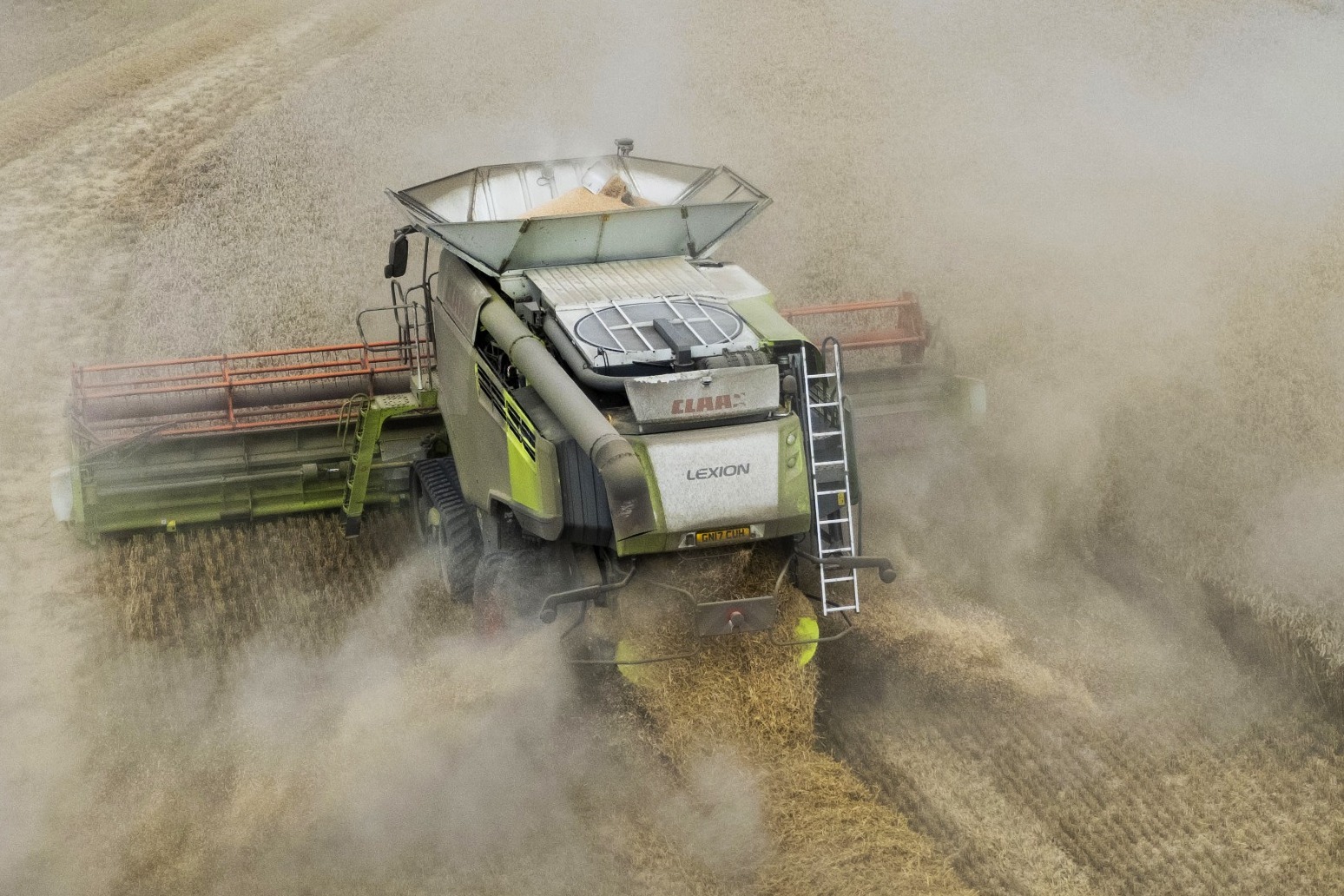
Arable farmers in the UK are facing a reduction in revenues of more than £800 million following one of the worst ever harvests, analysis suggests.
The Energy and Climate Intelligence Unit (ECIU) think tank released the estimate on Thursday after crop production was hit this year by the hottest spring and summer on record as well as drought conditions.
To estimate how much farmers may have lost, the researchers examined “per hectare yield” figures for wheat, spring and winter barley, oats and oilseed rape alongside the Agriculture and Horticulture Development Board crop area estimates for the UK.
They then compared current farm gate prices to Government figures for the 10-year average for production volumes from 2015-2024.
The analysis found revenues from the five staple crops were 20% less from the five staple crops in 2025, compared with what they would have earned if they produced in line with the 10-year average – or £828 million.
Farmers face a particularly sharp drop in revenue from oilseed rape, with a 38.4% decline from the 10-year average, followed by a 21.5% decline in milling oat revenues, 19.6% decline in milling wheat revenues and 16.1% in feed wheat.
This year’s anticipated poor harvest comes following one of the worst harvests on record in 2024 after the preceding autumn and winter saw extreme rainfall.
Lost production last year was partly offset by high prices, which remained elevated following Russia’s invasion of Ukraine driving up commodity prices in 2022-24.
However, the ECIU said this effect has now subsided, with prices returning to around the 10-year average for most crops.
This means lost production this year is likely to translate much more acutely into lost income for Britain’s farmers, it said.
The provisional Environment Department (Defra) figures in October found 2025 to be the second worst on record for England, with the UK harvest expected to be similarly poor.
Tom Lancaster, ECIU land, food and farming analyst, said: “This has been another torrid year for many farmers in the UK, with the pendulum swinging from too wet, to too hot and dry.
“With confidence in the sector at rock bottom, there is an urgent need to ensure farmers are better supported to adapt to these climate shocks and build their resilience as the bedrock of our food security.”
Mr Lancaster said delays to the relaunch of green farming payment schemes, such as the sustainable farming incentive, “are the last thing the industry needs”.
“Without reaching net zero emission there is no way to limit impacts like this from making food production in the UK ever more difficult,” he said.
David Lord, an arable farmer from Essex and member of the Nature Friendly Farming Network steering group, said: “With costs rising faster than prices, I’m not sure how many more years like this we can take as an industry.
“As a farmer, I’m used to taking the rough with the smooth, but recent years have seen near-constant extreme rainfall, heat and drought.
“Green farming schemes are a vital lifeline for me, helping build my resilience to these shocks whilst providing cashflow to help buffer me financially.
“But with the schemes closed and no clarity on their future, too many farmers are locked out, unable to access the support they need to adapt whilst facing a wider agriculture policy that does too little to build our resilience and too often works against it.”
The analysis comes ahead of a long-awaited review into farm profitability by Baroness Batters, the former president of the National Farmers’ Union, which is due to be published before Christmas.
A Defra spokesperson said: “Farming plays a central role in our mission to kickstart economic growth, with farmers acting as stewards for our nation’s food security.
“We know there are challenges in the sector and weather extremes, including prolonged dry weather, have affected harvests.
“We are backing our farmers in the face of a changing climate with the largest nature-friendly farming budget in history to grow their businesses and get more British food on our plates.”
Published: by Radio NewsHub



 -
- -
- -
- -
- -
-