Listeners:
Top listeners:
-
 play_arrow
Rother Radio (128K) Love Local, Love Music!
-
play_arrow
Rother Radio (64K) Love Local, Love Music!
-
play_arrow
Rother Radio (South Yorkshire) (64K) Love Local, Love Music!
-
play_arrow
Rother Radio (South Yorkshire) (128K) Love Local, Love Music!
-
play_arrow
Rother Radio (Doncaster) (64K) Love Local, Love Music!
-
play_arrow
Rother Radio (Doncaster) (128K) Love Local, Love Music!
-
 play_arrow
Rother Radio Xmas Love Local, Love Music!
-
play_arrow
Rother Radio – Special Announcement Love Local, Love Music!
radio



New blood tests to pick up early signs of cancer to be tested in the NHS

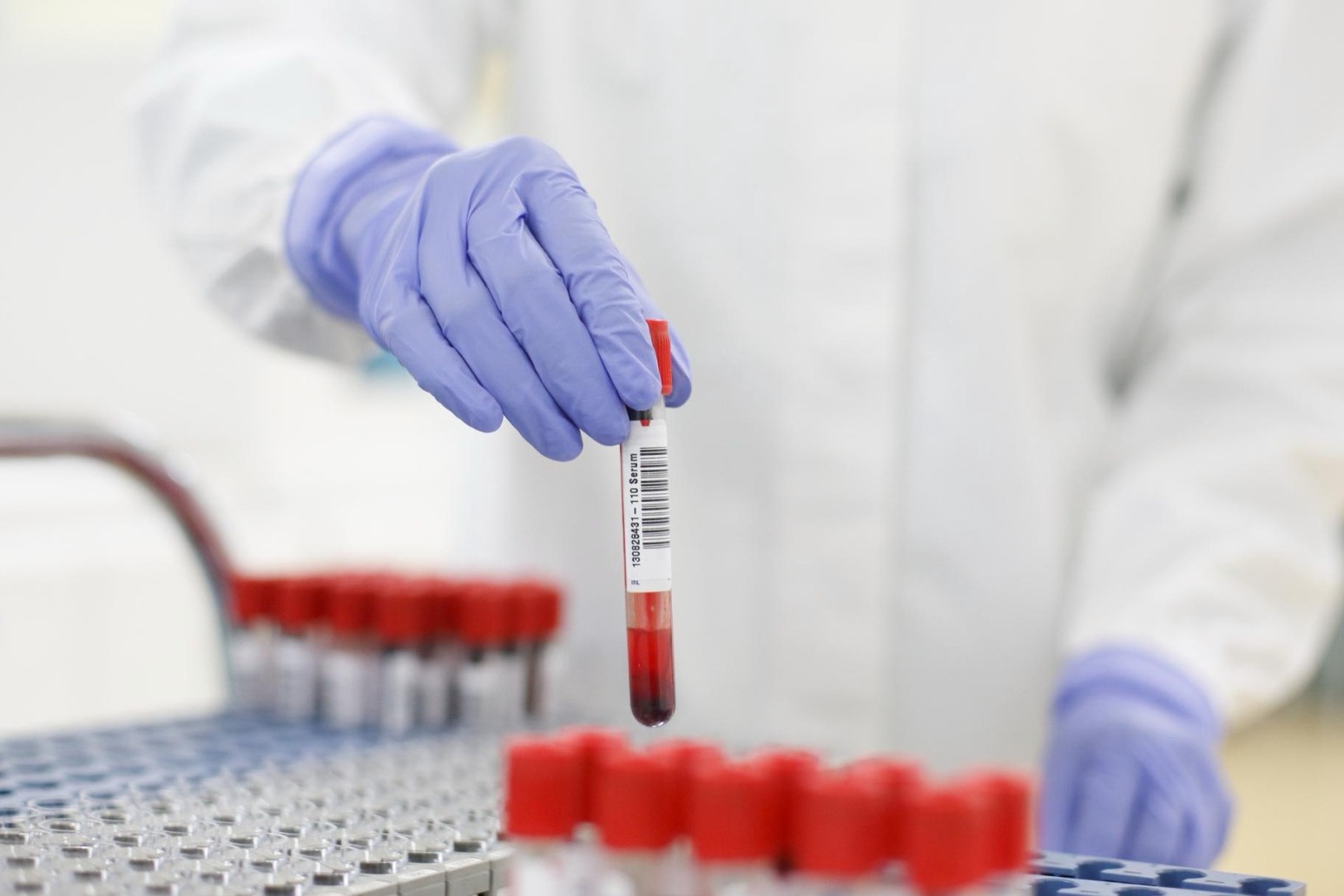
Four cutting-edge blood tests to pick up cancer in the earliest stages will be given to thousands of patients across the NHS.
Scientists have created tests that can pick up signals in the blood to indicate whether a person needs further investigation for suspected cancer, or whether they can be safely ruled out as having the disease.
The aim is to pick up cancer cases earlier via a simple blood test ordered by a GP, as well as cutting unnecessary referrals to hospital for invasive tests.
The new NHS trial will see more than 20,000 NHS patients in 200 GP surgeries given the tests to see how well they work in the real world.
The first four companies in the trial are Proteotype (with the Enlighten test), Pinpoint AI (with the PinPoint test), Natera (with the Signatera test) and Mercy Bioanalytics (with the Halo test).
Further tests may be added at a later date.
The Enlighten test works by measuring patterns of circulating amino acid biomarkers in human plasma, and then uses AI to examine the possibility a person has breast, bowel, lung or prostate cancer.
The test is intended for people who may have vague symptoms or who are known to be at increased risk of cancer, and works to tell medics which people may need further investigation.
Meanwhile, the Pinpoint AI test works to combine weak cancer signals in the blood to generate one strong test result.
Advertising for the test says the number of people referred for quick NHS cancer scans and tests is growing every year, but only 7% are eventually diagnosed with cancer.
“A way to accurately triage suspected cancer patients right at the start of the pathway could be transformational to patient outcomes and capacity management in NHS services,” it says.
The Pinpoint test analyses 32 biomarkers all at once, measuring how they interact and how they relate to cancer risk.
Work so far suggests it can be used to pick up signs of bowel, ovarian and lung cancer, as well as pancreatic cancer, liver cancer, bile duct cancer and stomach cancer.
Results from the test are returned to the doctor with a red, amber, green system to recommend what happens next.
Green suggests low risk (rule-out), amber is average risk (continue standard assessment) and red is high risk (prioritise).
Elswhere, the Signatera test is already used for picking up cancer that has come back, and is based on circulating tumor DNA (ctDNA) fragments shed into the blood by tumours.
The Halo test, meanwhile, analyses particles called single extracellular vesicles, which circulate at high levels in the blood even in early-stage cancer.
In the new NHS trial, people aged 45 and over who visit their GP with abdominal symptoms, such as persistent bloating or discomfort, will be given the chance to try one of the tests.
The new trial is called STRIDE-RCT.
Health minister James Frith told LBC Radio: “This is an exciting and world-first major trial for earlier diagnoses for abdominal cancers, which are notoriously hard to spot, very often because their symptoms can be misread as something other than cancer.
“Let’s imagine a patient presents with vague symptoms, a inflated stomach or bloating, or changes to bowel movements recently – very often, those symptoms can be misread as something else.
“What this means is that the blood tests could help earlier diagnose and put patient on the relevant pathway, or discount it and get the peace of mind that it isn’t cancer.”
Mr Frith said it may take 18 to 24 months to determine if any of the tests might be suitable for a national rollout.
Health Secretary Yvette Cooper said: “The earlier cancers are diagnosed, the more chance they can be successfully treated, and lives can be saved.
“Innovations like these are a key part of our National Cancer Plan, which will provide faster diagnosis, more effective treatment, and better care for every patient, while also investing in the trials and technology that offer hope of curing cancer for good.”
Professor Peter Johnson, NHS national clinical director for cancer, said: “We are at the start of revolution in cancer diagnosis, and this trial will help us to find out whether blood tests can help GPs get the right patients to the right tests sooner, supporting earlier diagnosis when treatment is most likely to be successful.
“It is vital that we gather the evidence about these new technologies and I am grateful to everyone taking part in this research.”
Michelle Mitchell, chief executive of Cancer Research UK, said: “GPs have long needed better tools to help them navigate that uncertainty by identifying which patients require further testing and this trial in England is an important step towards addressing that need.
“This trial exploring whether blood tests could help GPs identify people who need further tests and, ultimately, diagnose cancers earlier is welcome.
“The findings will be valuable in guiding further research, including whether these tests could be used in the NHS.”
Published: by Radio NewsHub


On Air Now

Non-Stop Music!
Rother Radio, Non-Stop!
Rother Radio plays the best variety of music, non-stop!
closeSponsored

Weather
Rotherham-º -
 -
 -
 ---
 ----------
Upcoming Local Event

