Listeners:
Top listeners:
-
 play_arrow
Rother Radio (128K) Love Local, Love Music!
-
play_arrow
Rother Radio (64K) Love Local, Love Music!
-
play_arrow
Rother Radio (South Yorkshire) (64K) Love Local, Love Music!
-
play_arrow
Rother Radio (South Yorkshire) (128K) Love Local, Love Music!
-
play_arrow
Rother Radio (Doncaster) (64K) Love Local, Love Music!
-
play_arrow
Rother Radio (Doncaster) (128K) Love Local, Love Music!
-
 play_arrow
Rother Radio Xmas Love Local, Love Music!
-
play_arrow
Rother Radio – Special Announcement Love Local, Love Music!
radio



Charles Dickens’ writing chalet among sites added to heritage at risk register

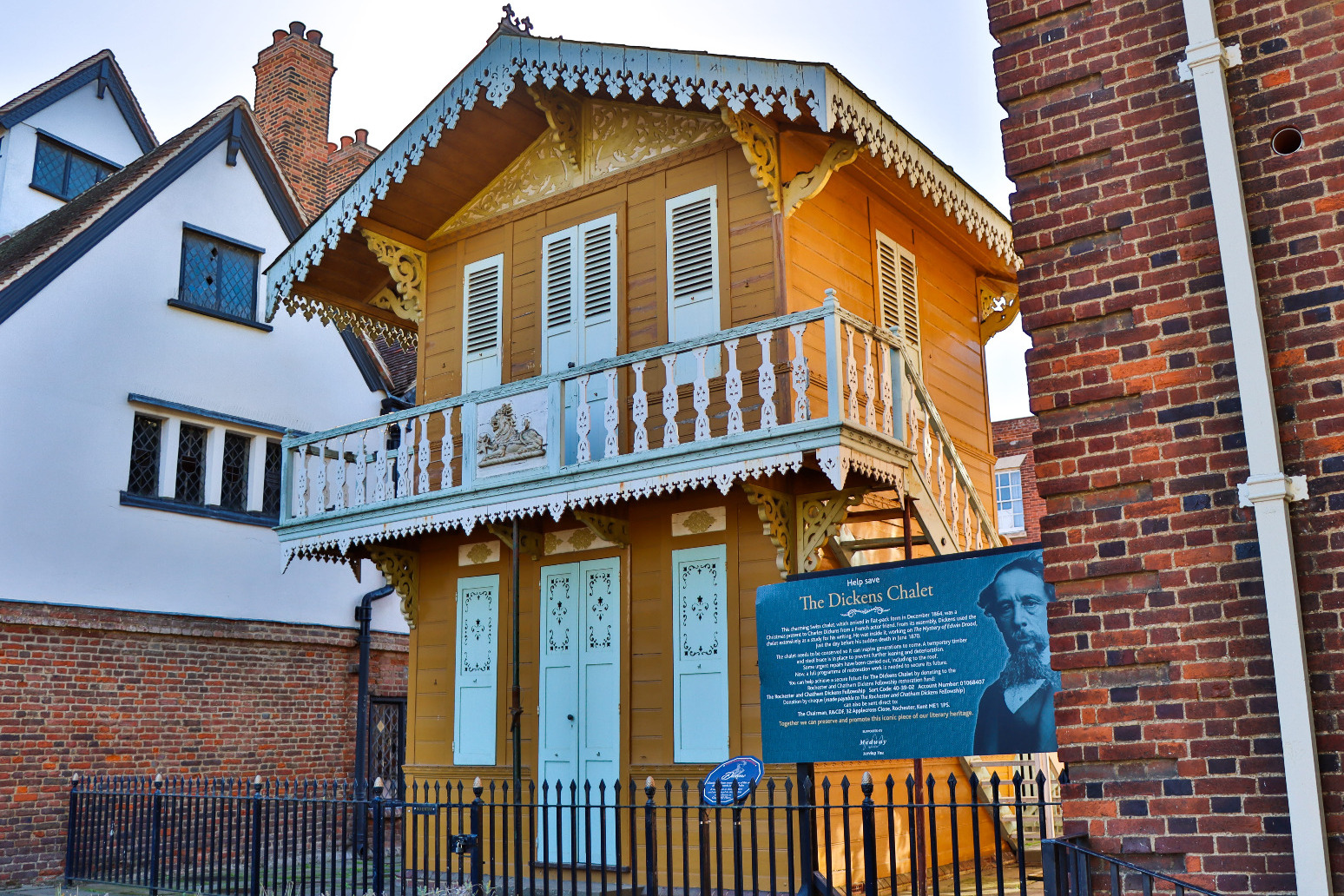
The two-storey Swiss chalet stands in the gardens of Eastgate House in Rochester
A writing chalet where author Charles Dickens wrote some of his acclaimed novels and rehearsed for public performances is under threat, heritage experts warn.
The two-storey Swiss chalet, which once stood in Dickens’ garden at Gads Hill Place in Higham and now stands in the gardens of Eastgate House in Rochester, Kent, is among the historic sites added to the latest heritage at risk register amid concerns about its decaying timbers and structural problems.
William Shakespeare’s daughter Susanna’s home, Grade I-listed Hall’s Croft in Stratford-upon-Avon, Warwickshire – which has also played host to literary figures such as George Bernard Shaw, has also been added to the list this year over the major conservation challenges it faces.
But government agency Historic England says there is better news for other significant pieces of heritage, including the hut where Gloucestershire doctor Edward Jenner performed the first vaccinations against smallpox, which has been saved after it was added to the register last year.
There are close to 5,000 buildings, places of worship, archaeological site, parks, gardens, conservation areas, battlefields and protected wreck sites on the register which shows they are at risk of neglect, decay or inappropriate change.
New entries include Dickens’ hut, which was originally a Christmas gift to the author in 1864, serving as a quiet spot where he was able to work on several novels including Our Mutual Friend, The Uncommercial Traveller and his final unfinished work The Mystery Of Edwin Drood.
It is also believed the upper floor of the timber framed building was lined with mirrors so that he could rehearse for his public appearances, in which he performed dramatised readings from his own novels.
But now the Grade I-listed building – moved to its current location in the 1960s – is in poor condition, with timber decay and structural instability preventing public access and leaving it in need of repair.
Medway Council has secured a £240,000 grant from the National Lottery Heritage Fund, in addition to £40,000 of council funding and £5,000 from the Dickens Fellowship, to develop plans to restore the building and create a new garden setting.
At Hall’s Croft, where Shakespeare’s daughter lived with her husband Dr John Hall, funding is needed to save the 17th century building’s exterior, including repairing damage caused by a vehicle hitting the front of the structure.
It has already benefited from a £1 million donation from playwright Ken Ludwig, but more funds are needed for the next phase of work, Historic England said.
Other sites added to the heritage at risk register include Hastings Castle in East Sussex – one of the first three castles built by William the Conqueror and depicted in the Bayeux Tapestry, which has become vulnerable in the face of its exposed setting and coastal erosion.
A large area of wildlife-damaged moorland in Fylingdales, North Yorkshire, where a blaze last year caused damage to 20 scheduled monuments, six listed buildings and natural landscapes including important peatlands, has also been added to the list.
In better news, a number of historic buildings and sites have been taken off the list as a result of being saved from neglect and decay, including the Jenner Hut, in the garden of The Chantry, Berkeley, Gloucestershire, where Edward Jenner carried out the first smallpox vaccinations in 1796.
Funding from the National Lottery Heritage Fund has meant work has been carried out to save the hut, christened by Dr Jenner as the “Temple of Vaccinia” and seen as the birthplace of vaccination and immunology.
The historic Newlyn Harbour in Cornwall, Loftus conservation area in Cleveland and Redcar, the Grade II*-listed Severn Wharf Building – part of the Ironbridge Gorge Museum in Shropshire – and Wolterton Hall Park and Gardens landscape in Norfolk have also all been saved.
Heritage minister Baroness Twycross said: “Every part of the UK is bursting with history, so it is vital we protect the heritage sites at the heart of communities which help tell the stories of our nation.
“That’s why our £1.5 billion Arts Everywhere Fund is so important, supporting efforts to save more than 1,000 arts venues, museums, libraries, and heritage buildings across England.”
She said it was fantastic to see Newlyn Harbour removed from the list having received a grant from the Heritage at Risk Capital Fund.
“However, this year’s register is an important reminder of the pressures facing our historic environment, from ageing buildings and structural deterioration to the impacts of extreme weather.
I want us to build on our progress to ensure our heritage is protected for generations to come,” she said.
Published: by Radio NewsHub


On Air Now

Early Breakfast
The best variety of hits, non-stop!
The early bird catches the worm and they also get the best variety of hits!
closeSponsored

Weather
Rotherham-º -
 -
 -
 ---
 ----------
Upcoming Local Event

